
Corderum Case Study
How Many Subscriptions
Do You Have?

Measuring spend and IP security
We Framed Two Main Problems

Enlighten
Subscription Management
Keeping track of your personal subscriptions like Netflix or Prime is one thing; now imagine an entire company trying to manage all the subscriptions for all its employees. Nearly everything a company needs to operate is now offered as a subscription, and Corderum was designed to manage it all.

Enlighten
Shadow IT
The Visibility & Control Gap: A massive 79% of IT professionals admit that Shadow IT puts corporate data at risk, yet only 8% of organizations claim to have full visibility into their actual Shadow IT footprint. Furthermore, 59% of IT leaders state they openly struggle with "SaaS sprawl" (managing the sheer volume of software applications popping up across teams).
User research
Who, What, Why
Why
The Target Persona
Enterprise organizations managing hundreds of cloud subscriptions.
Key personas include:
CIOs, CTOs, CFOs, Devops, and business operations leads
Key personas include:
CIOs, CTOs, CFOs, Devops, and business operations leads
Why
The Problem 30% - 40% Waste
Organizations lacked visibility into subscription usage, leading to 30-40% waste on unused services.
Manual tracking consumed valuable time and prevented effective cost optimization.
What
The Solution
A unified subscription management and monitoring platform providing real-time visibility, usage analytics, and automated workflows.
The system enables multi-dimensional filtering by company, location, role, and individual contributor.
Based on Needs gathering Research
The Personas And Their Needs
User Research
Clair
The CFO
Primary Role
Subscription Management
Responsibility
As a financial manager, there is a critical need to gain oversight of the digital ecosystem. The struggle centered on visibility and utilization.
Direct Quotes
objectives
01
Identify all applications currently being expensed.
02
Track renewal terms and upcoming expirations.
03
Monitor real utilization to identify shelved assets.
Chris
The CIO
Primary Role
Policy Management &
Governance
Responsibility
The CIO's primary focus was security. Governance requires granular control over how subscriptions are distributed and who can access specific environments.
Direct Quotes
objectives
01
Instant onboarding/offboarding processes.
02
Distribution logic based on company, org, or role.
03
IP protection through environment monitoring.
Tom
The CTO
Primary Role
Cloud Migration
Responsibility
For the CTO, operational efficiency was the pivot. The goal was to "cloudify" internal systems and reduce time-to-market for new infrastructure.
Direct Quotes
objectives
01
Accelerate environment firing from weeks to minutes.
02
Maximize utilization to prevent system overspending.
03
Dynamic resource reallocation to meet real-time demand.
Measuring spend and IP security
What They Didn't Know Was Costing Them
Keeping Track
Volume
How many application or service subscriptions does your organization have?
Keeping Track
Spend
Do you know what your department spend is?
Do you know what your organization spend is?
Keeping Track
Utilization
Are you paying for subscription that are no longer in use?
Are you paying for more seats than what you need?
Keeping Track
IT Cost
What's being built outside your security guardrails?
How much proprietary tech walks out the door with exiting employees?
What kind of risk are your customers and business actually facing?
User Research
Journey and Empathy Mapping
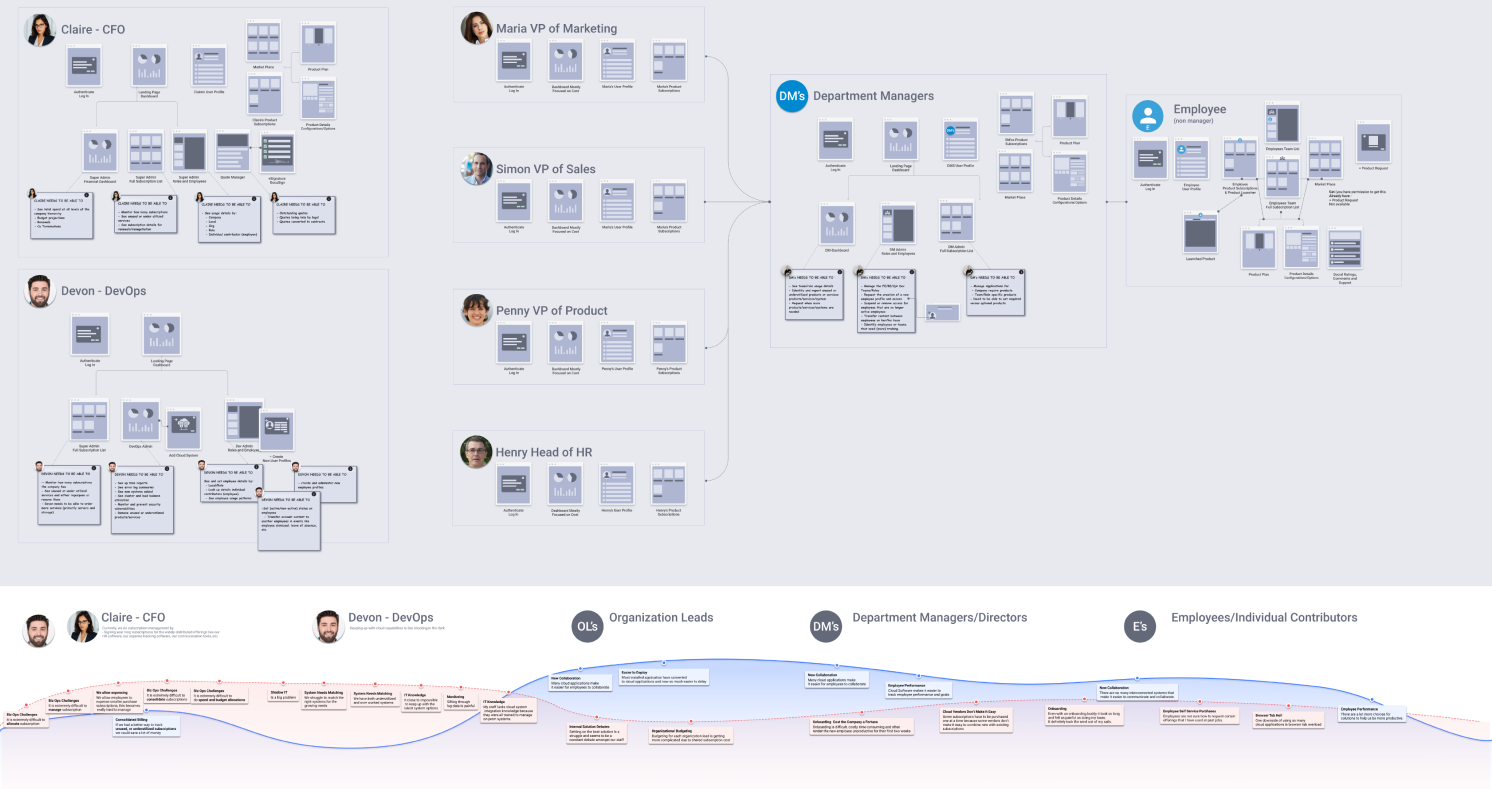
Every project begins with a set of hypotheses, but turning those assumptions into insight requires mapping the actual user experience. These empathy and journey maps allowed us to visualize the user's path, deeply understand their struggles, and validate their true needs.
My Ownership in this project
As VP of Product Design, UX, and Strategy
My team and I owned the end-to-end design strategy, from initial stakeholder interviews to high-fidelity prototyping and design system integration. I led the UX architecture for the subscription management dashboard, designed the journey mapping framework, and managed the handoff to engineering, ensuring pixel-perfect implementation of the core interaction model.

Strategy & Vision
Information Architecture
User Research & Validation
Journey Mapping
High-Fidelity Prototyping
Design System Integration
Customer Interviews/Validation
Competitive Analysis
Design Presentation and Investor Pitch
Custumer Quote
“Corderum was so easy to use and easy to understand. The interface really delivers a best-in-class experience for budgeting, policy management, assessment, monitoring, and analytics.”
Prototype
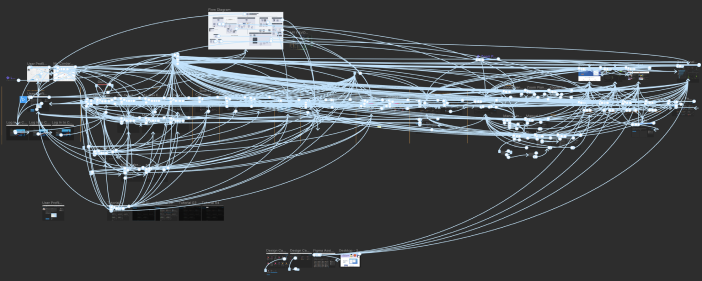
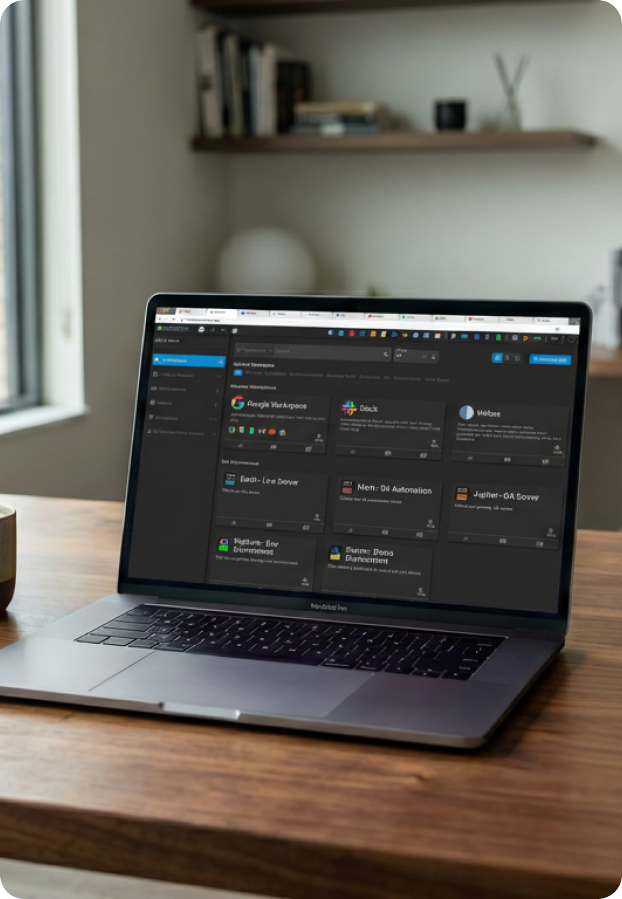
This is the original Corderum prototype, untouched since 2021.
Before AI. Before variables. Before components could carry more than a handful of states. We were stitching together interactivity by hand, screen by screen, with the tools available at the time.
Prototyping a full application back then meant compromise. We couldn't wire every path, so we wired the ones that mattered most. We kept cheat sheets nearby to remember our own navigation logic. We clicked around the edges of screens just to trigger the highlight state that reminded us where the hotspots were. None of this was visible to the people testing it. It was our own scaffolding, invisible to everyone but us.
What you're looking at took real effort to pull off. It represents what serious prototyping looked like before AI changed the equation. I'm not giving you a modern AI-rebuilt version of this project. I'm giving you the artifact as it was, so you can see the constraints we were designing inside of.
Prototyping a full application back then meant compromise. We couldn't wire every path, so we wired the ones that mattered most. We kept cheat sheets nearby to remember our own navigation logic. We clicked around the edges of screens just to trigger the highlight state that reminded us where the hotspots were. None of this was visible to the people testing it. It was our own scaffolding, invisible to everyone but us.
What you're looking at took real effort to pull off. It represents what serious prototyping looked like before AI changed the equation. I'm not giving you a modern AI-rebuilt version of this project. I'm giving you the artifact as it was, so you can see the constraints we were designing inside of.
Reflection
What We Learned
What Could Be Better
Mobile experience was de-prioritized due to timeline constraints. While the responsive web experience works, a native mobile app remained on the roadmap.
What Went Well
Early and continuous validation with enterprise customers offered solid proof for the need, and it helped us prevent pivots. The journey mapping exercise proved invaluable] by creating alignment across product, design, and engineering, and became a living document we referenced throughout development.
Key Learnings
Our most costly mistake was skipping an initial competitive analysis. We focused heavily on validating user needs and solutions, which caused us to overlook the fourteen other companies already operating in this space.
We possessed the vision to deliver a far more complete and superior offering. However, a field of fourteen active competitors proved to be an immediate blocker for most of the venture capitalists we were engaging with.
We possessed the vision to deliver a far more complete and superior offering. However, a field of fourteen active competitors proved to be an immediate blocker for most of the venture capitalists we were engaging with.
The Punchline
Corderum made the tough decision to no longer pursue the subscription management and the cloud migration offerings and instead focused on assisting one of our partners Blulogix with their platform needs. While it was not the outcome that I would have preffered, it was an incredible learning experience.
Christian Baptiste
© 2026 Christian Baptiste Portfolio Showcase
